
Let’s look at some figures to understand the scope and scale of loneliness in the UK. The National Health Survey 2024 undertaken by the NHS is comprehensive and helps us grasp the reality of loneliness.
How did those taking part judge how often they felt lonely?
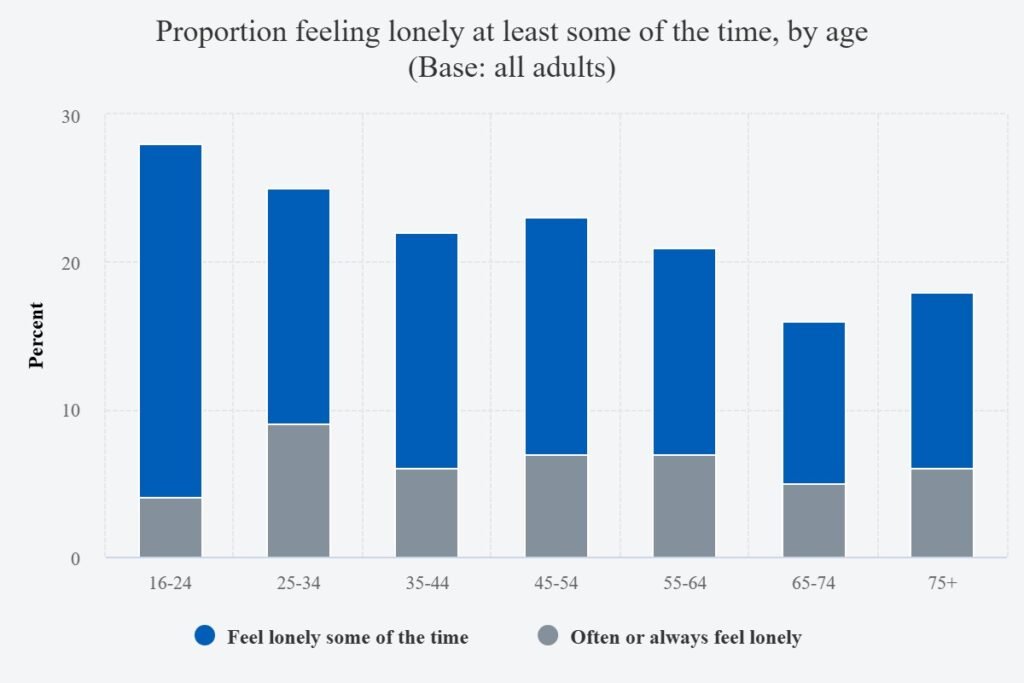
What other useful information came from the research?
Are there any common observations about people who are lonely?
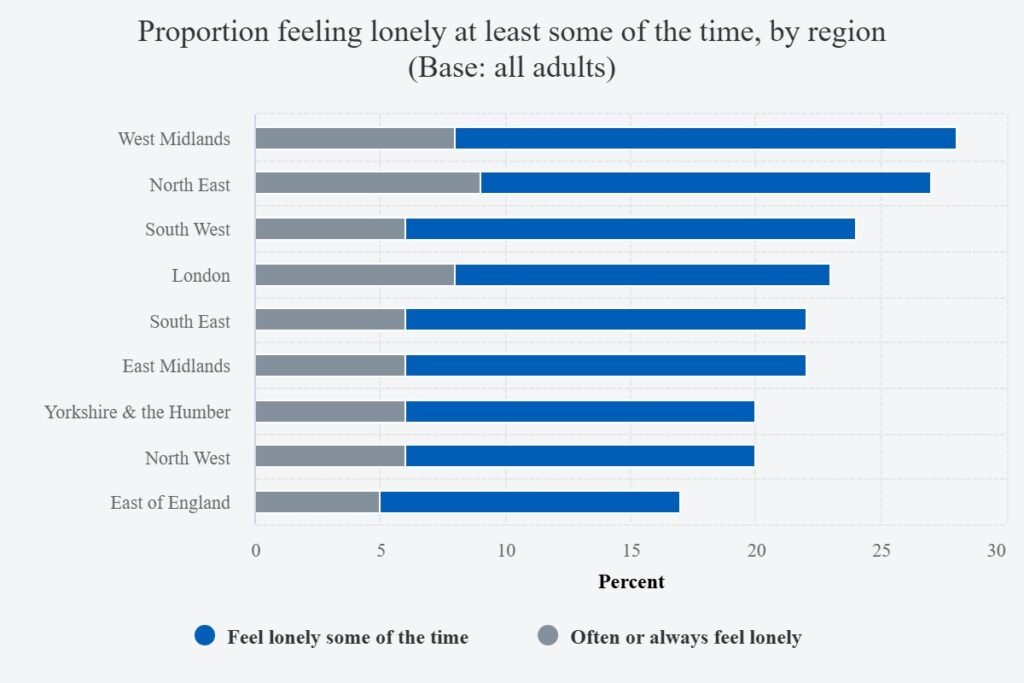
So, how is loneliness affecting the individual?
Central is the huge impact on the individual’s quality of life which in turn can affect the lives of relatives and others.
Some interesting research from US addresses the impact of loneliness. Mental health and wellbeing are important areas affected by loneliness. Often loneliness leads to early mortality, a doubling in the risk of developing depression and it has links to severe anxiety, chronic stress and suicide. Poor physical health triggers high levels of the stress hormone cortisol which weakens the immune system. Loneliness impacts chronic illnesses increasing the likelihood of raised blood pressure, heart disease, stroke, type 2 diabetes plus cognitive decline and dementia. Lonely people are more likely to adopt poor lifestyles embracing lack of exercise, poor sleep quality, smoking and the neglecting of self-care.
…. and the impact on society?
It puts more pressure on health care services including NHS.
Economic productivity is depressed with lower educational attainment and skills development. The 2017 report “Cost of Loneliness to UK Employers” put the cost at £2.5billion per year.
Loneliness also dilutes the “glue” called social cohesion weakening trust, community resilience and the social fabric in society.
What is this telling us about the quality of life and how the individual contributes to society and interacts with other people?
Is loneliness mainly an issue about getting old? What about the young?
Loneliness is widely seen as a problem primarily faced by the elderly. Public and political debate, programmes to tackle the challenges and funding are largely directed at the elderly. Loneliness amongst the elderly is a real and significant problem. What is probably less understood is that young adults are more affected by loneliness and the trend of isolation is growing.
If you are under 35, you are five times more likely to have chronic loneliness than those aged 65+. Surveys suggest that people in the under 35s group are likely to have just one friend or none at all . This social trend is growing, up from 7% to 22% over the last 10 years. Research at Harvard states that the under 30s were most affected by the covid pandemic in social development and that damage remains.
Higher education research suggests that roughly 50% to over 60% of students experience loneliness weekly with some studies showing numbers as high as 70% in university halls.
We live in an age of digital sophistication and social media but is this environment adding to meaningful human contact being relegated to the sidelines? Has remote working and lower levels of socialising contributed to the loneliness epidemic? Research tends to point to these conclusions. One big question shouts out. Will this pattern become the learned norm with future generations experiencing greater levels of loneliness.
Particularly for young adults, isolation and loneliness hold back personal development with a huge negative knock-on effect on society.
What is the Mental Health Foundation saying about loneliness?
The Mental Health Foundation found that the stigma of loneliness makes it hard to talk about. People worry about being judged or feeling like a burden. Certain factors increased the chances of severe and lasting loneliness which resonated with other surveys. Interestingly, being a carer , from LGBTQIA+ and being unemployed are added to the list of vulnerable groups.
…. and what are the people who are lonely saying?
Michael is 58 and from South East England. He lives alone in the family home which is up for sale. Michael has experienced long-term mental health issues and rarely left the house between 1989 and 2016 when his mother, who had supported him became ill. She died in May 2020 and Michael is deeply lonely without her.
“Loneliness is like being on a desert island. You feel there’s only you. Normally, when you go through something, you have friends, you have family, so you’re going through it with them because you’re in contact with them. It’s feeling like you’re on a desert island, so it’s all on your shoulders. Going through whatever it is you’re going through, you’re entirely alone.”
Rachel is 29 and lives in a small town in Wales. She is a single parent to two children aged seven and 12. She is currently unable to work because of her mental and physical health conditions. She struggles with loneliness as she spends a lot of time alone.
“Obviously both my children are in school, so I’m just in the house on my own during the day. It can get quite lonely because I don’t have many friends and the only adult conversation I do have is with my parents.”
Other research and studies on loneliness that may be of interest
The Campaign to EndLoneliness is a must read.
Loneliness at Work from the British Red Cross.
HMG’s Community Life Survey.
University of Southampton’s study into mental health problems flowing from loneliness in the student population.